
Permission to Act Like a Child

child 1I am a huge fan of hypothetical situations. I often laugh out loud at hypothetical “what ifs” that play through my mind. In accordance with this pastime, I often think about “what if” we reacted to things the same way as children? Can you imagine?

I am disappointed that my favorite class at the gym got cancelled so I proceed to throw a pathetic tantrum at the front desk. Someone cuts in front of me at the store when I am in a huge hurry…and I respond by tattling to the checker while bringing my shoulder low and pushing my body in front of the person that cut me in line. This brings a smile to my face, but is not acceptable in the least.

While this picture of childlike behavior paints a picture of immaturity and a lack of skills to deal with difficult situations, I have recently begun to consider the spiritual lessons and wisdom that I can gain from my five-year-old daughter, Conley. Recently, I found her in our hallway closet in declarative prayer. My son had jumped off of something and hurt himself (Disclaimer: He was adequately supervised. He is just an intense and very fast child). I was tending to him, and when he settled down, I could hear Conley in the closet speaking the truth of Scripture and declaring him “healed.” She came out and said, “Mom, you don’t have to worry about him. The Bible said God can heal and so he’s ok.”

In another situation, she had heard a story on the radio about a veteran who could not find employment. She asked my husband to pray with her in the truck. She spoke the truth of Scripture over him and a few weeks later told me, “Mom, we don’t have to worry about that man from the radio station. God hears our prayers and he will handle it.” I could share numerous other stories where I have been reminded of how simple Scripture really is when it comes to truth.

Children are able to view the truth of Scripture in a way that is less jaded and distorted when compared to adults. I have been so overwhelmed with God’s generosity as he reveals his strength and truth through my own adult-sized pride. As I have taken lessons from my 5-year-old, it has shaped my prayer life. I now declare God’s specific scriptural truths over my family in the same way as my child. I find peace and freedom in discovering and declaring those truths over my family each day.

I encourage you to seek out scriptural truths to refute the lies you have led yourself to believe, and end the battles you thought you had to fight. Pray from a declarative position as I was so humbly taught by my child. I hereby give you permission to act like a child.

This post was written by Lindsey Wesley. To read more about her, click here

How to Pray BEFORE the Meltdown

declarative prayerI don’t know about you, but taking care of sick kids wears on me after a while. My girls took turns being sick for two weeks and not long afterward my eldest ran fever for 7 days straight. Too sick to go to school but not sick enough to stay in bed. Irritable kids. Irritable mom. Flesh struggling against flesh patterns. Lots of triggered pain. You get the picture.

But my heart is my responsibility.

How do I work through this, especially after I’ve completely lost my composure?Declarative Prayer.

We steer where we stare. Declarative prayer gives me a vehicle with which I can shift my focus back on God and what He says is true. Declarative prayers aren’t speaking magic incantations or denying the difficulties I face.

They help me recognizing that even in the midst of this circumstance, God gets the last word.

Let’s go back to my quasi-meltdown. Afterward, I settled down and thought. Once I verbally processed what I was feeling, I identified the lie I believed: abandonment. It went something like this, “I am alone. No one wants to help me and it’s up to me to make everything come together. Of course, I will fail and it’ll all be my fault.”

Cheerful, huh?

Once I said it out loud I could see the ridiculousness of it all. This lie was in direct opposition to a promise God spoke to my heart a few years back. He said, “Jodi, I’m going to help you.

That’s it. When I thought about His promise, it wasn’t difficult to enter into declarative prayer. Here’s an example:

“Lord, thank You for helping me through this tough time. You are able to keep me from falling and present me without fault (Jude 24). I’ve had a hard time, but You have not given me a spirit of fear, but a spirit of power, of love and of self-discipline (2 Timothy 1:7). Because of the finished work of the cross I have peace with God (Colossians 1:20) and I can do all things through Christ (Philippians 4:13). So instead of relying on my old coping mechanisms to get me through today, I am going to lean into who I am in Christ and trust You. I am not responsible for making everything work today. Instead of pre-judging others, I will ask for help from the appropriate people and move forward from there. Thank You for helping me walk in reality instead of vain imaginations.”

Bam.

I’ve never spent time praying this way when His peace didn’t give me clarity to take the next step. And friends, honestly that’s what most of us need. We couldn’t handle detailed marching orders for the rest of our life. He’s going to show us the next step. Then we get to choose whether or not we’re going to obey.

When you realize you’re rapidly approaching a pain cycle, I want you to remember that you are not powerless. You can use declarative prayer to release the power of God into your heart, your mind and your response. Go for it!

This post was written by Jodi LaFrance. To read more about her, click here

Comparison in Relationships

measuring-stickComparison. It’s a disgusting cycle of endless “crouch-down moments” or many days of standing tall, feeling like a million bucks. Constantly holding a measuring stick up within a situation or relationship continuously creates gaps in your life.

Whether you are seemingly greater than those around you—or often, feeling less than your surroundings, both types of gaps create separation between others and us.

Comparison keeps us from experiencing community. We fear rejection, so we don’t pursue potential friendships, or we withhold love and acceptance to those who are beyond our comfort zone, those we believe have not measured up.

When we separate ourselves from other people, we deny ourselves the opportunity to experience the kingdom of God within those people.

I neglected people for years because they weren’t like me, but the Lord convicted me for taking it upon myself to place a stamp value on those around me.

During this time the Lord spoke to me, “Natalie, when you reject them, you are rejecting me. You are missing out on an incredible opportunity to experience ME inside of them.”

Tears filled my eyes as I imagined countless people I have hurt by not seeing who God has made them to be as an individual. Not to mention the instances I rejected people and neglected to celebrate with others because their success, in my eyes, threatened my own lack of confidence.

Many times I forget God’s standards and approval are all I need. Not only has God already approved me, but He has approved of others as well.

From that day, my measuring stick came down, gaps were removed, and I started to see the Kingdom of God inside many, even those I once disqualified. I felt fully free to experience God in incredible ways through my relationships with others.

Colossians 3:15 says, “Let the peace of Christ rule in your hearts since as members of one body you are called to peace and always be thankful.”

The truth is God has made us all different, but we are called to operate as a body. If you think about the body, there are different functioning parts that all have various but equally important roles.

Until we are at peace with who God has made us to be and how we were made to function, we will never be at peace with who He has made others to be and how he has made them to function. Our differences will become competing factors that work against us instead of complimenting factors that unify us.

Danny Silk once said it like this, “He didn’t give us gifts to separate us, but to assemble us together.”

In my own life, I have come to find out that competition breeds division, whereas confidence invites celebration and appreciation. That, I believe, is the true key to having healthy relationships.

This post was written by Natalie Hallford. 

Chemically Dependent

woman brainThe science of neuroplasticity: that’s what we all think of when we hear the word friendship, right? I mean, all I’m looking for in a friend is the right combination of elements to come together for good social chemistry…
Wait, this is not an eHarmony commercial. We are talking about friendships–not soul mates, significant others, or whatever your relational term-of-the-day happens to be. But the science is real, my friends, and applies to more than just the dating arena.

Traditionally, it was thought that the physical brain stopped developing in early childhood, but recent studies have shown that we can grow our brains throughout our lives! Neuroscientist Dr. Caroline Leaf points out that connections between the nerve cells change each time we have an experience. Our brain can actually rework its anatomy in a positive love direction or a toxic fear direction by what we choose to contemplate, and successive actions associated with those choices. So, this, my friends, is the science of neuroplasticity (Don’t you feel smart now? I challenge you to toss that phrase into your next conversation).

Let’s link the Bible with science for just a moment and look at some Old Testament friendships. I recently read over the scenario of Job’s friends coming to sit with him while he suffered. After Satan takes his property, children and health, Job’s friend Eliphaz tells him: Of course you’ve done something sinful since you lost your children and your prosperity (Job 5:1-5)! Toxic thought delivery? Check! Job’s friend Bildad goes so far as to call him a windbag (Job 8:2) and tell him that God probably took his kids because they were sinful. Negativity? Yup!

Thankfully, these are not the only models of friendship we have to draw upon. Listen to the words of Jesus in John 15:15: “I no longer call you slaves, because a master doesn’t confide in his slaves. Now you are my friends, since I have told you everything the Father told me.” Literally, the smartest choice we can make for a friend is Jesus. Why? Because, unlike Job’s poorly-trained-in-grief-counseling buddies, Jesus offers these brain-altering words: “I have said these things to you, that in Me you may have peace. In the world you will have tribulation. But take heart! I have overcome the world” (John 16:33). When you have toxic thoughts such as “I can’t do this” or “I don’t have the energy to change”, reflect on Your Friend Jesus the Overcomer. His Truth will actually re-wire your brain.

The beauty of Jesus’ friendship with us is that our relationships with others are impacted, too. You knew this already, so let me give you some scientific tidbits to back that up. When we choose to help another person and show love in some way, our body produces two chemicals called dopamine and oxytocin to “melt down” toxic thought pathways (Perfect love casts out fear—1 Jn. 4:18). Conversely, if you want to harbor bitterness toward another or wallow in self-pity, remember that you are creating chemical “water” to expand deadly branches in your brain. Choosing forgiveness and repentance physiologically alters those branches to flourish and become healthy.

Jesus wants to be our true BFF and renew our minds! When we choose Him first, we can then love one another and truly experience supernatural spiritual chemistry.

This post was written by Shelli Jarvis. To read more about her, click here

Pressing Beyond Uncomfortable

friendshipI got the chance to eat lunch with one of my dear friends a couple weeks ago, and I came away from that moment feeling so refreshed. We shared our hearts with each other, celebrated exciting news, talked about things that we’re struggling with, and encouraged one another – all in a matter of a couple hours. We were real with each other. And it was fellowship that my heart desperately needed.

In the last few years of working with college students, I have heard countless stories from young women about the struggle of trying to build life-giving friendships with other women. I can easily understand their pain, because I use to live in that cycle of desiring authentic relationships, but not allowing myself to push past the “uncomfortable” enough to build authentic relationships.

When I think back to why I was so hesitant to cultivate deep friendships, I realize that it wasn’t because I’m naturally an introvert (which is true), or even because of stories in my past that have too closely resembled scenes from “Mean Girls.” My problem was that I had no idea who I was in Christ, and therefore had no confidence that I was worthy or deserving of life-giving friendships.

As I began to learn who I was in Christ, my confidence grew. As my confidence grew, so did my ability to build friendships. When I choose to walk boldly in who I am in Christ, I am free to love people without fear of rejection. I’m free to hear God’s truth for my friends when they need it. I’m free to encourage instead of being worried about saying the wrong thing. I’m free to invest in relationships without the fear of being inadequate.

Brené Brown says it this way:

Belonging starts with self-acceptance. Your level of belonging, in fact, can never be greater than your level of self-acceptance, because believing that you’re enough is what gives you the courage to be authentic, vulnerable and imperfect.

We are enough today. We can confidently be who we were created to be, and we can build authentic, deep relationships right in the season and place God has us. Will it always be easy? Heck, no! But it’s so well worth it.

This post was written by Catherine Dunn. To read more about her, click here

Two Are Better Than One

women praying“A friend loves at all times, and a brother is born for a time of adversity.” Proverbs 17:7

Anticipation and joy quickly turned to heartbreak. It was hard to breathe. The words “no heartbeat” had been the last thing I expected to hear. I had loved and carried a baby for 13 weeks to find out we would never bring her into our home. With my husband out of town and no family nearby, I drove home to an empty house. I composed myself long enough to send a text to a dear friend.

“Where are you?” was her immediate response.
Within an hour she was at my door. She sat with me, cried with me and carried my weight. The next day the ladies of our Life Group were at our door with meals. We were showered with love and hugs and tears and texts. This went on for months as we walked through the ugly steps of grief. In a time where I felt it hard to continue, my friends were my biggest blessing. I have learned that sometimes the most beauty comes from tragedy. Through adversity my friends became my sisters.

Who is your community? Who can you call on when your life is no longer sunshine and roses? I so hope that your answer to this question is immediate. If it is not—if you find yourself with nobody you can be real and honest and prayerful with—I want to challenge you. I want to challenge you to take a step out of yourself, out of your busy life, and seek real community.

How very thankful I am that God places people in our lives to minister to us. But friends take time.

In our busy schedules we could choose to continue on without making time to foster relationships. In our hard times we could choose to put on our happy Christian masks and act like we don’t hurt or make mistakes or feel insecure. Oh, sisters—this would only be an injustice to ourselves! The world says being Facebook friends is enough, but let our example of friendship set us apart. Let us live out the model set for us in Acts 4:32.

All the believers were one in heart and mind. No one claimed that any of their possessions was their own, but they shared everything they had.

I see an immediate need within the body of Christ for people to feel like they belong. Let’s choose to live in community as God has designed us to. Let’s chose to do life with one another. Please don’t miss out on the true beauty there is to be found in friendships with Christ as the center point. If there is one thing I have learned of late it is that God will carry us through the storm, but sometimes he uses the arms of friends.

“Two are better than one, because they have a good return for their labor. If either of them falls down, one can help the other back up. But pity anyone who falls and has no one to hold them up.” Ecclesiastes 4:9-10

This post was written by Makenzi Wethington. To read more about her, click here

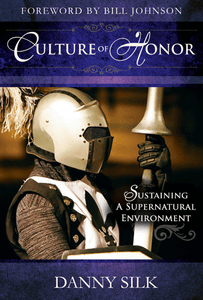
Culture of Honor {A Book Review}

book review- HonorEvery month, we feature a book review based on our blog theme for that month. For more great book suggestions, check out our Bookshelf tab here. (And for you non-readers, check out the audio book options!)

The blog focus this month has been honor, and when I was asked to do a review of a book on that topic, I choose Culture of Honor by Danny Silk.

Like most of Danny Silk’s books, he has a single, foundational idea that we must first learn. In Keeping Your Love On, he says it like this: “The only person I can control, on a good day, is myself.”

Creating a culture of honor can only occur when we lay down our need to control others.

Related to this, creating a culture of honor is about leading people to unleash “their true capacity for self-control and responsibility,” so they can experience “the freedom God desires for each of his sons and daughters” (p. 45).

In order for these two things to happen—first, our ability to self-control and not “other-control” and second, our ability to lead others to also self-control—we must firmly know our identity in Christ.

We control out of insecurity, self-protection, fear, etc.; however, our status as daughters in the kingdom releases us from the need to control other people’s behavior.

Once we understand our status, we can help others walk in the freedom of their status: as sons and daughters, we are unpunishable (p. 80). Jesus already took on our punishment.

So we have to first believe this about ourselves, and then we can create a culture of honor toward others because we believe it about them too.

Everything is fine with honor until someone messes up, right? And we get to see how we feel about sin (and punishment) based on our response to other people’s mistakes:

“If we don’t know how to deal with sin, then we don’t know how to deal with people. We inevitably create a culture of law in order to keep people from sinning. The message of that culture is this: ‘Contain your sin within yourself. Don’t show it to me; I can’t handle it.’” (p. 168).

But the new covenant is an internal covenant—we are free, and God intends us to exercise our freedom through self-control. He doesn’t put external controls on us.

But when people mess up, we freak out, and we need a system of external controls. We need to modify, or correct, or punish their behavior because we don’t know how to deal with people’s mistakes.

Two false ideas must be broken: the first is that love is control—“that which we love, we try to control” (p. 78)—and the second is that love is fear:

“What offense does to you is it justifies you from withholding your love. I get to withhold my love from you when you have broken the rules because people who fail are unworthy of love, and they deserve to be punished. In fact, what punishment looks like most often is withholding love. And when I withhold love, anxiety fills the void, and a spirit of fear directs my behavior toward the offender” (p. 93).

Wow.

Danny’s message is that honor empowers people. When I’m no longer concerned with controlling you or punishing you, I learn to ask the right questions: “What is the problem? What are you going to do about it?”

I put the responsibility on the individual to self-control and take ownership.

And because I don’t need to control, I can empower and call forth the real identity of the person—who he or she is in Christ.

The book is geared toward church leaders for a culture of honor on staff, but I found it widely applicable to my marriage, my friendships, and my students!

Here’s to self-control, not “other-control”! 🙂

This post was written by Laura Brandenburg. To read more about her, click here

Responding to What’s Real

messy flowersThe feminine heart was intricately designed by God to be responsive. Our hearts naturally long to be courted and to be won. However, we do ourselves and the men in our lives a disservice when we indulge ourselves in a practice of over-romanticizing marriage and dating relationships. It can truly shut down our ability to respond freely and fully when it is time to.

Sometimes I think the poor fellas can be sabotaged before they even begin to approach one of us because we have nurtured such outlandish expectations of what those encounters with the opposite sex are “supposed” to be like. I about did Greg in during that season of our lives with analyzing what I should be feeling, how he should or shouldn’t be leading, whether we had the right amount of “fireworks,” and if I was about to miss God’s will if I went for it. How much time and emotional energy had I invested for years in romantic fantasy, fueled by movies, books (Christian romance, of course!), plain old comparison, and my own secret hopes?

At the time, I found myself genuinely conflicted. I had to come to faith that I was created for the role of being a responder. To boil it down, for me it was a battle between Fantasy and Reality, and trust me, #thestrugglewasreal. This handsome, hairy man chose to pursue me, and now I can’t even imagine what I would have missed out on if the Holy Spirit had not filled me with enough bravery to abandon myself to the wild mystery that is relationship, and to risk saying yes to this amazing, faithful, funny, wise, self-sacrificing, imperfect, flesh-and-blood man who was right in front of me.

When a real-live man who is sincerely following Christ takes the initiative toward you, try responding. He is honoring you by wanting to know you. It takes vulnerability and courage to share his affection with you. I would hope that as tender women with soft hearts, we could have a heart-response of gratefulness and openness. Give a guy the chance. Be appreciative of what is right in front of you. Embrace the simple. Learn to accept that person and enjoy them for who they are. Let enough time pass to see what grows and develops without (a) rejecting the possibility of a future together, or (b) rushing straight ahead to planning the ceremony and imagining what your children will look like!

Let’s choose to have soft, grateful hearts for the men God brings into our lives. Every relationship along the way is an opportunity to practice responding out of our feminine hearts and honoring the masculine soul anywhere we see it on display. No matter what season we each find ourselves in, could we champion the men in our lives…our brothers, our dads, our pastors, our friends? Could we make it a joy for them to be the leaders they are created to be? the initiators? the hard workers? providers? protectors? They should be able to count on us as their #1 supporters. And after all, how irresistible is that?

This post was written by Jill Brown. To read more about her, click here

Honor in the Workplace

When my husband and I moved to Plainview, we were newly married, swimming through life with love and a whole lot of immaturity!  We joined Harvest, and God began to put my husband and I on a path of learning honor that started in our home.

I began to learn that honor was a state of my heart.  It didn’t matter what Jodie did or didn’t do or deserve, my heart was called to honor this man. Wait, what??
That would require me to humble myself, bite my tongue, and allow the Holy Spirit to transform my heart?  YES!

I was given the incredible opportunity to have a family and be called to work outside the home. I was also put on another path: learning to honor in the workplace.  As much as I often struggled with whether to work or stay home with my kids, God always led me to a place of work outside the home.  For a long time, I beat myself up over what I thought Christian women would say about me if I didn’t stay home with my kids.  But I knew God had called me to work outside the home; so I embraced it, gave it my all, and have chosen to not be ashamed to walk in God’s best for me!

So, how do we as women embrace honor in the workplace?  How do we cultivate a heart condition/environment that honor will flourish in?

There will always be many work situations that are both positive and negative.  You may work for the best boss in the world, or you may have a boss that is controlling and rules with an iron fist.  Either way, does it change God’s desire for us to live from a place of honor?

How do I respond when my boss makes me mad?  What if I disagree with a decision that was made?  How does my “talk” about him/her show honor?  What if they make a mistake? How do I respond?  What if others try to draw me into their negative conversation about my boss?  Do I do the same amount of work when I am monitored and when I am not?

Ephesians 6:5-8 says,

Slaves, obey your earthly masters with respect and fear, and with sincerity of heart, just as you would obey Christ. Obey them not only to win their favor when their eye is on you, but as slaves of Christ, doing the will of God from your heart. Serve wholeheartedly, as if you were serving the Lord, not people, because you know that the Lord will reward each one for whatever good they do, whether they are slave or free.


This scripture is pretty straightforward.  Do your “work” as unto the Lord.  But if the state of our heart has not embraced the foundational truth of honor, then this scripture will be offensive, out of reach, and defeating.

How do we begin this journey and get on a path of honor?

It begins with surrendering and believing who we are in Christ. If I don’t believe who I am in Christ—that I am righteous, whole, and lacking nothing—then my boss, husband, or any authority figure can send me into a “tizzy” real quick.  No matter what my boss does, I am ok and secure in Christ.  My faith is not in man but Christ alone.

I can honor my boss and cover him/her because of who I am, not because of his/her merit.  We can’t change anything on our own.  We can’t “will” or try harder for our heart to change; only the Holy Spirit can do that.  In the process of allowing God to transform our beliefs, our choices can start to mirror God’s heart.  When I learned this powerful, life-changing truth, my world was turned upside down, and my “work” blessings have multiplied 100-fold!

As I began living out the truth about honor, God began to show me, as the picture above so beautifully portrays, I was like a child who needed foundational truth. I needed to embrace the reality that honor is not about the other person; it’s about the condition of my heart.  The result of growing in honor is a doorway to endless possibilities and blessing.

Come join me on this journey?

This post was written by Amy Meek. To read more about her, click here

Honor in Marriage

wedding-ring-hands-740001-jpgNot long after we were married, Curtis and I moved into a small, old farmhouse WAY out in the country. We were pretty much newlyweds, and I was blissfully unaware of what life would be like out in the country. For the most part, it was fun. Some of our favorite memories of marriage are when we lived in the country. But it was also where we had our first big argument.
Well, it was a fight. I’m just going to be real.

I came home one afternoon after work, and the toilet was in the dining room. In. The. Dining. Room. Curtis had a saw and was cutting a hole into the wall of our one and only bathroom. He proceeded to tell me that we had a leak, and he was fixing it. I asked him, WHEN HE WAS GOING TO PUT THE TOILET BACK IN THE BATHROOM!? He told me we would be without water for several days, but he put a bar of soap out by the windmill and some toilet paper outside if I needed to go to the bathroom. Y’all, he was serious. I FREAKED!!!!!

Although we both come from good, God-fearing families, we came into our marriage with two TOTALLY different experiences. For example, when something broke at Curtis’ house, they fixed it. When something broke at MY house, we called a professional to fix it. 🙂  This seems very insignificant. But I soon found out that this was important to me. Honestly, the toilet in the dining room was merely an inconvenience that I had to experience. It was certainly not the end of the world, and we laugh about it now (Because when things break, he still fixes them himself).

In hindsight, this was one of the first lessons I learned about HONOR in my marriage. My expectation was disappointed by reality. Ladies, this happens in every marriage. If it hasn’t happened to you yet, it will. We all react differently when we are in our “pain cycle.”   As for me, I spoke loudly and erratically. Well…I yelled, ok?

After I calmed down and we talked about it, Curtis informed me that it was not ok for me to speak loudly and erratically to him when I’m upset. That’s just not how things were going to be resolved in our home. And he’s right. Even though I felt like I had the right to be angry with him, I still had to learn how to honor him when we disagreed (Or when he was going to fix something that was broken).

Proverbs 31: 12 speaks of a wife of noble character relating to her husband: “She brings him good, not harm, all the days of her life.”

Notice it doesn’t say she will bring him good, not harm….only when she feels loved and cherished by him; or only when he listens to all of her problems and gives her his undivided attention; or only when he comes home from work and helps her cook dinner, cleans up the kitchen, helps with bath time, and puts all the kids to bed. It doesn’t say she will bring him good, not harm…only when he becomes the spiritual leader of the home; or only when he stops looking at pornography; or only when he treats her the way she expects to be treated.

If I’m honoring my husband ONLY when my expectations are being met, then I’m not really honoring with God’s grace. Actually, if this is the only time I honored Curtis, I would be setting myself up for an unhealthy marriage, an unhappy husband, and an unsatisfied life.    

So what does HONOR look like in a marriage when your expectations are constantly being disappointed by reality? It looks like:

  • praying for your husband even when you really want to speak loudly and erratically
  • learning to be patient when you really want to nag
  • treating him the way you want to be treated when you are frustrated with something he’s done (or not done)
  • being his cheerleader even when you think you know how to do it better
  • being his advocate when others put him down
  • learning how to manage your home so you’re not co-dependent on him

So what if your problems aren’t just the run-of-the-mill marital problems? What if there is abuse or addiction? Get help. There are so many incredible professionals who can help you walk through any and every kind of situation.

We’ve got to start letting go of trying to “fix him,” and start seeking the One Who created marriage, knows our every desire and need, and brings us complete joy in this life when we surrender to Him.  We all have the ability to be a wife of noble character, whose husband has full confidence in her–to be a woman who fears the Lord. This takes honesty, diligence, vulnerability, repentance, and perseverance. This will take a lifetime of learning who you are in Christ and how you can be one flesh with the man God gave you. Don’t give up, friend! I want to encourage you to examine your heart and look for new ways you can honor your husband today!

This post was written by Allison House. To read more about her, click here