“When peace like a river attendeth my way, when sorrows like sea billows roll; whatever my lot, thou hast taught me to say, ‘It is well, it is well with my soul.'” I have always had a certain affection for peace. I can remember a time in my life when a comment was made about me that went something along the lines of, “Oh, yes, Savanna, our little peacemaker.” Peace has been a fruit that I believed was a way to rid myself of all the pain that would come against me. Got Pain? Get Peace. If only it was that easy. If only that was what Jesus meant when he said, “I have told you these things, so that in me you may have peace. In this world you will have trouble. But take heart! I have overcome the world” (John 16:33).
The space between pain and healing can sometimes feel long and impossible. When I was pregnant with my daughter, I was diagnosed with PUPPPS. While it sounds cute and cuddly, I can assure you it isn’t. I was left with hives covering my entire body, and I itched 24/7 until my raw skin bled. They told me that once I had my baby it would go away, but unfortunately that wasn’t true. For months after I had Eloise, I itched and itched. I laid miserably in bed, unable to avoid the pain. Physical pain has a way of making you feel too weak to reach out to God. Very rarely did I feel peace. I couldn’t fathom how peace and pain could coexist in my body. I wish I could say that I ran to God during this season. This season was followed by an even more painful one, and this time instead of physical pain, it was emotional turmoil and mental anguish. That’s the thing about pain: it might recede for a moment, but it is guaranteed to return. When I revisit Jesus’s words in John 16:33, I focus on a different part of his words: “I have told you these things, so that IN ME you would have peace…” It is IN Jesus that we have peace, not because the pain goes away, but because the pain doesn’t hold the power. Jesus does!
I was recently talking to a friend who was going through a challenging season at work. As she was stepping into this new role, feeling much outside her control and capability, she made the comment that she still felt she had peace. The Holy Spirit spoke in that moment and reminded us that He doesn’t give His peace to those walking outside His will. If you feel like the pain is too much, start by taking it the Lord and asking Him to search your heart and motives. It might be that He is asking you to surrender instead of endure. Some pain can be self-inflicted, and we won’t know until we ask God to reveal it to us. This is where God uses community to help bring His peace. Don’t live isolated or believe the lie that you have to walk through painful circumstances alone because you don’t want to burden others. The truth that is spoken by trusted members of the body of Christ can help lift the burdens you are carrying and usher peace into your heart.
Now, when I am overtaken with pain, I can remind my body, mind, and soul that it is not the final say in my hope. Peace is found in surrendering the pain to Jesus and allowing Him to hold me through it. The verse that is written on my heart and gets repeated over and over is Philippians 4:4-7, “Rejoice in the Lord always. I will say it again: Rejoice! Let your graciousness be known to everyone. The Lord is near. Don’t worry about anything, but in everything, through prayer and petition with thanksgiving, present your requests to God. And the peace of God, which surpasses all understanding, will guard your hearts and minds in Christ Jesus.” When pain washes over you like sea billows, use Scripture as your prayer. Allow it to be the balm to your heart that can keep you steady and anchored in Him.
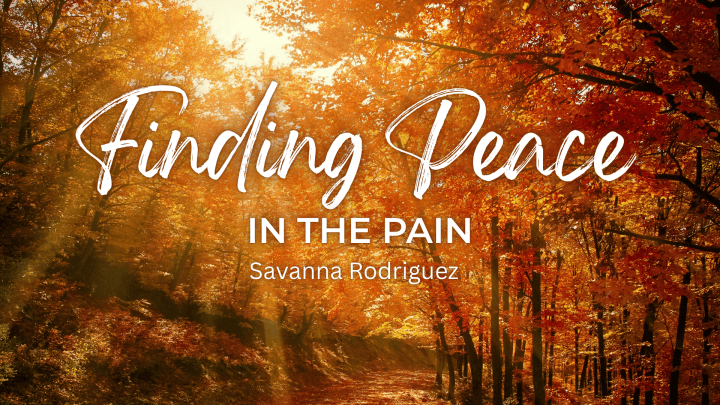
We would like to thank Savanna Rodriguez for writing this blog.